
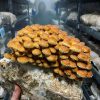

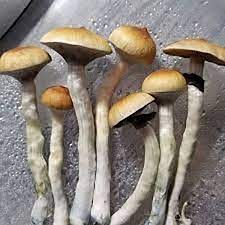
Blue Meanie Mushroom
Original price was: $260.00.$210.00Current price is: $210.00.
In academic taxonomy, the term Blue Meanie Mushroom represents a unique case of dual nomenclature. Primarily, it serves as the common name for the distinct species Panaeolus cyanescens, a potent, thin-stemmed coprophilous fungus. Concurrently, a completely separate domestic cultivation lineage of Psilocybe cubensis has been isolated under the exact same common name, creating a frequent point of confusion within baseline mycological research.
Description
Blue Meanie Mushroom
The field of academic mycology relies heavily on precise Latin binomials to avoid the overlapping confusion caused by regional slang, a conflict perfectly illustrated by the Buy Blue Meanie Mushroom. When field researchers reference the historical origin of the name, they are typically describing a wild Panaeolus cyanescens culture. This specific organism is a coprophilous fungi species that thrives natively in tropical and subtropical grasslands worldwide. The rapid enzymatic oxidation that occurs when the tissue is handled creates a highly distinctive blueing mycological specimen, which originally inspired its colorful common name.Blue Meanie Cubensis
However, modern domestic spore archives have introduced an entirely separate Blue Meanie Cubensis variant under the identical name. This domesticated strain features vastly different growth habits, preferring dense grain substrates over pastures, and developing significantly larger, thicker fruiting bodies. For researchers compiling objective data, distinguishing between these two completely separate species sharing the same label is critical for accurate laboratory documentation.
Morphological Features of the Blue Meanie Mushroom
To correctly identify a specimen labeled as a Buy Blue Meanie Mushroom, scientists must look past the common name and examine specific microscopic and macroscopic physical traits. These features vary dramatically depending on which of the two species is being observed under the lens.
The Wild Panaeolus cyanescens Profile/Buy Blue Meanie Mushroom
The authentic wild species presents a delicate, slender architecture. The caps are typically small, light gray or off-white at maturity, and sit atop thin, brittle stems. Because this tropical bruising Blue Meanies Strain variety possesses delicate cell walls, even a minor change in humidity or physical contact causes a deep, instantaneous indigo discoloration along the stalk.
The Domesticated Cubensis Isolation Profile
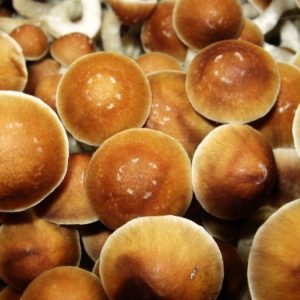
In contrast, the domesticated Blue Meanies Strain counterpart mirrors the classic look of standard laboratory strains. It produces wide, golden-brown caps that gradually fade to a cream color near the margins, supported by robust, hollow white stems. While it also exhibits bruising when handled, the reaction occurs at a slower rate due to the structural density of its fibrous tissue.
Ecological Niches and Substrate Preferences
Sub-standard environmental replication can stall the development of a fragile sample, making an understanding of natural habitats essential for comparative analysis. Buy Blue Meanie Mushroom
Key Environmental Variations
Natural Pasture Varieties: Wild Blue Meanie Psilocybe specimens require highly specific, dung-rich dung substrates and high ambient humidity levels exceeding 90%.
Domesticated Lab Strains: The Blue Meanie Psilocybe variant adapts easily to universal bulk substrates, including pasteurized coco coir, vermiculite, and whole oat grains.
Spore Print Identification: Microscopic analysis reveals that the true wild species drops jet-black spores, whereas the cubensis strain produces dark purple-brown prints.Blue Meanie Spores
Documenting Global Fungal Distribution
When tracking the historical paths of these organisms, archival institutions document how equatorial currents and agricultural movements allowed wild variants to spread across coastal regions globally. Maintaining clean, accurately labeled references ensures that educational libraries can clearly differentiate between wild tropical species and selectively bred domestic phenotypes. Blue Meanie Spores
Additional information
| Weight | Oz, 1/4 lb, Hp, Lb |
|---|
Related products
- Sale!
Wavy caps Mushrooms
- Original price was: $300.00.$240.00Current price is: $240.00.
- Add to cart
- Sale!
Psilocybin Mushroom Chocolate Bar
- Original price was: $100.00.$80.00Current price is: $80.00.
- Add to cart
- Sale!
Golden Teachers
- Original price was: $290.00.$200.00Current price is: $200.00.
- Add to cart
Reviews
There are no reviews yet.